
Distracted driving motorcycle accidents remain one of the most serious threats riders face on American roads. While many drivers think a quick glance at a phone is harmless, that moment of inattention can be enough to cause a devastating collision with a motorcyclist. Riders are smaller, less protected, and easier to overlook than passenger vehicles. When a distracted driver drifts into another lane, turns without checking blind spots, or brakes too late, the rider usually takes the worst of the impact.
In 2026, this topic matters even more because road safety officials continue pushing public awareness campaigns against texting, screen use, and other distractions behind the wheel. For injured riders, distracted driving also matters legally. It can become a key factor when proving negligence, establishing fault, and pursuing compensation after a crash. If you ride regularly or want to understand your rights after a wreck, it is worth knowing how distraction causes motorcycle collisions and what evidence can help build a strong injury claim.
Why Distracted Driving Is So Dangerous for Motorcyclists
Distracted driving is dangerous in any traffic situation, but it is especially harmful when motorcycles are involved. A car or truck driver may fail to notice a rider at an intersection, misjudge a bike’s speed, or change lanes without enough room. Because motorcycles are narrow and can disappear into blind spots more easily than larger vehicles, even a split second of distraction creates real danger.
The Most Common Driver Distractions That Lead to Motorcycle Crashes
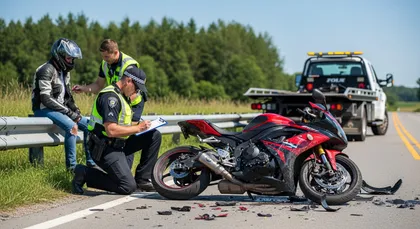
Not every distraction involves texting. Many motorcycle crashes happen because a driver is mentally, visually, or physically pulled away from the road. Some of the most common examples include using a phone for calls, reading messages, checking GPS, adjusting music, eating, reaching for objects, or talking to passengers. Even hands-free technology can create cognitive distraction if the driver’s focus shifts away from traffic conditions.
Texting and app use behind the wheel
Texting is one of the worst distractions because it takes a driver’s eyes, hands, and mind off driving at the same time. For riders, that can mean a driver never sees them before making a sudden move. At intersections, this often leads to left-turn crashes, rear-end collisions, or side-impact accidents.
Failure to see motorcycles in blind spots
Many drivers already struggle to notice motorcycles. Add distraction to the mix, and the risk gets worse fast. A driver who casually glances at a side mirror while also thinking about a notification or dashboard screen may miss a rider completely. That kind of lane-change collision often leaves little room for a motorcyclist to escape.
Motorcyclists are also vulnerable when traffic slows suddenly. A distracted driver may not react in time and slam into the rear of a motorcycle. Unlike someone inside a car, the rider has no metal frame, airbag, or seat belt to absorb the impact. That is why these crashes so often cause fractures, road rash, head trauma, spinal injuries, and long recovery periods.
Why These Crashes Often Cause Severe Injuries
Motorcycle crashes linked to distracted driving tend to be violent because the driver frequently does not brake soon enough or take evasive action at all. When impact happens at full or near-full speed, the injuries can be catastrophic. Riders may be thrown from the motorcycle, pinned under another vehicle, or dragged across the pavement.
These collisions can also create complicated legal and insurance disputes. A driver might deny using a phone. An insurer may argue the rider was speeding, lane splitting, or hard to see. That is why it helps to document the crash quickly and understand how negligence is proven. You can learn more about building that type of case in your related post on how to prove fault in a motorcycle crash case.
How Distracted Driving Affects Liability and Injury Claims
From a legal standpoint, distracted driving usually points to negligence. Drivers have a duty to operate their vehicles with reasonable care. When they focus on a phone, screen, conversation, or another distraction instead of the road, they may breach that duty. If that careless behavior causes a motorcycle crash, the injured rider may have the right to seek damages for medical bills, lost income, property damage, pain and suffering, and other losses.
What Evidence Can Help Prove Distracted Driving
Proving distraction is not always easy, but strong evidence can make a major difference. In many cases, the best proof comes from a combination of official records, witness accounts, and electronic evidence gathered soon after the collision.
Phone records, video, and witness statements
Phone logs may help show whether the driver was texting, calling, or using data at the time of the crash. Dashcam footage, traffic camera recordings, surveillance video from nearby businesses, and eyewitness testimony can also support the claim. If someone saw the driver looking down before impact, that observation can be powerful evidence.
Police reports matter too. An investigating officer may note statements, roadway conditions, vehicle positions, and any signs that the driver was inattentive. In more serious cases, accident reconstruction experts may be used to explain how the crash happened and whether delayed reaction time played a role. Medical records, photographs, helmet damage, bike damage, and skid marks also help connect the injuries directly to the collision.
Comparative fault and common insurance defenses

Even when the other driver was distracted, insurance companies often try to shift part of the blame to the motorcyclist. They may claim the rider was traveling too fast, was not visible enough, or could have avoided the collision. In many states, comparative fault rules mean a rider can still recover compensation, but the amount may be reduced by their percentage of fault.
That is why the details matter. Visibility, road layout, traffic flow, and rider conduct all become part of the investigation. Conditions like rain, fog, dusk, or poor street lighting may also affect how the claim is evaluated. Your readers may also benefit from your post on how weather and light conditions affect motorcycle crash liability, especially when insurers try to blame environmental factors instead of driver negligence.
State law can shape how claims move forward as well. Helmet laws, fault rules, filing deadlines, and damage limitations vary depending on where the crash happened. That makes it useful to review your guide on motorcycle accident laws in your state when building internal link relevance around this topic.
For prevention-focused readers, it also makes sense to direct them to motorcycle safety tips to help prevent accidents on the road. Defensive riding cannot eliminate distracted drivers, but it can improve reaction time and reduce exposure in high-risk traffic situations.
Riders can also strengthen their safety habits by reviewing current guidance from the National Highway Traffic Safety Administration, which continues to warn drivers about the deadly consequences of distracted driving.
The bottom line is simple. Distracted driving motorcycle accidents are not random events. In many cases, they happen because a driver chose convenience over attention and a rider paid the price. For injured motorcyclists, the strongest next step is to preserve evidence, avoid guessing about fault, get medical care immediately, and speak with an attorney who understands how to uncover distraction evidence and push back against insurance tactics. A well-documented case can make the difference between a denied claim and a meaningful financial recovery.