
Electric Motorcycles Are Changing the U.S. Motorcycle Landscape
Electric motorcycles are becoming increasingly visible on American roads. Advances in battery technology, electric motors, charging systems, and motorcycle design have created new options for riders who want performance without a traditional gasoline-powered engine.
For many riders, electric motorcycles offer several appealing characteristics. They can provide instant torque, quiet operation, fewer traditional drivetrain components, and potentially lower operating and maintenance costs. At the same time, the technology introduces safety considerations that riders, drivers, manufacturers, and regulators need to understand.
Electric motorcycles still share many of the same fundamental dangers as gasoline-powered motorcycles. Riders remain exposed to traffic, road hazards, inattentive drivers, poor weather, and the physical consequences of a crash. Motorcycles also lack the protective structure surrounding occupants of passenger vehicles.
The Insurance Institute for Highway Safety reports that 6,228 motorcyclists died in U.S. crashes in 2024. It also estimates that, per mile traveled, motorcyclists faced a death rate nearly 27 times that of passenger-car occupants.
That broader motorcycle safety problem is important when considering electric motorcycles. The power source may be different, but the consequences of a collision can still be severe.
Electric motorcycles can also introduce additional concerns involving batteries, charging, acceleration characteristics, vehicle weight, and unfamiliarity among other road users.
Understanding these risks can help riders make better safety decisions and can also become important when determining what happened after an accident.
What Makes an Electric Motorcycle Different?
An electric motorcycle replaces the traditional internal-combustion engine and fuel system with an electric motor, battery pack, electronic controls, and charging equipment.
One of the biggest differences riders may notice is the way electric motorcycles deliver power.
Traditional gasoline motorcycles typically build power through engine RPM and transmission gearing. Electric motors can deliver substantial torque almost immediately. This can make acceleration extremely responsive.
For an experienced rider, that responsiveness can be useful. However, it can also create problems for inexperienced riders or anyone who is not accustomed to the motorcycle’s throttle response.
A rider who unintentionally applies too much throttle could accelerate faster than expected, potentially creating a loss-of-control situation.
Electric motorcycles are also quieter than gasoline motorcycles. While reduced engine noise may be beneficial from an environmental and riding-comfort perspective, it creates another consideration: other road users may not hear an approaching motorcycle as readily.
This matters because visibility is already a significant problem for motorcyclists.
IIHS explains that motorcycles are more difficult for other drivers to see than passenger vehicles and that riders lack the protection of an enclosed vehicle.
The combination of a motorcycle’s relatively small visual profile and reduced engine noise can make defensive riding especially important.
Battery Safety Is One of the Biggest New Concerns
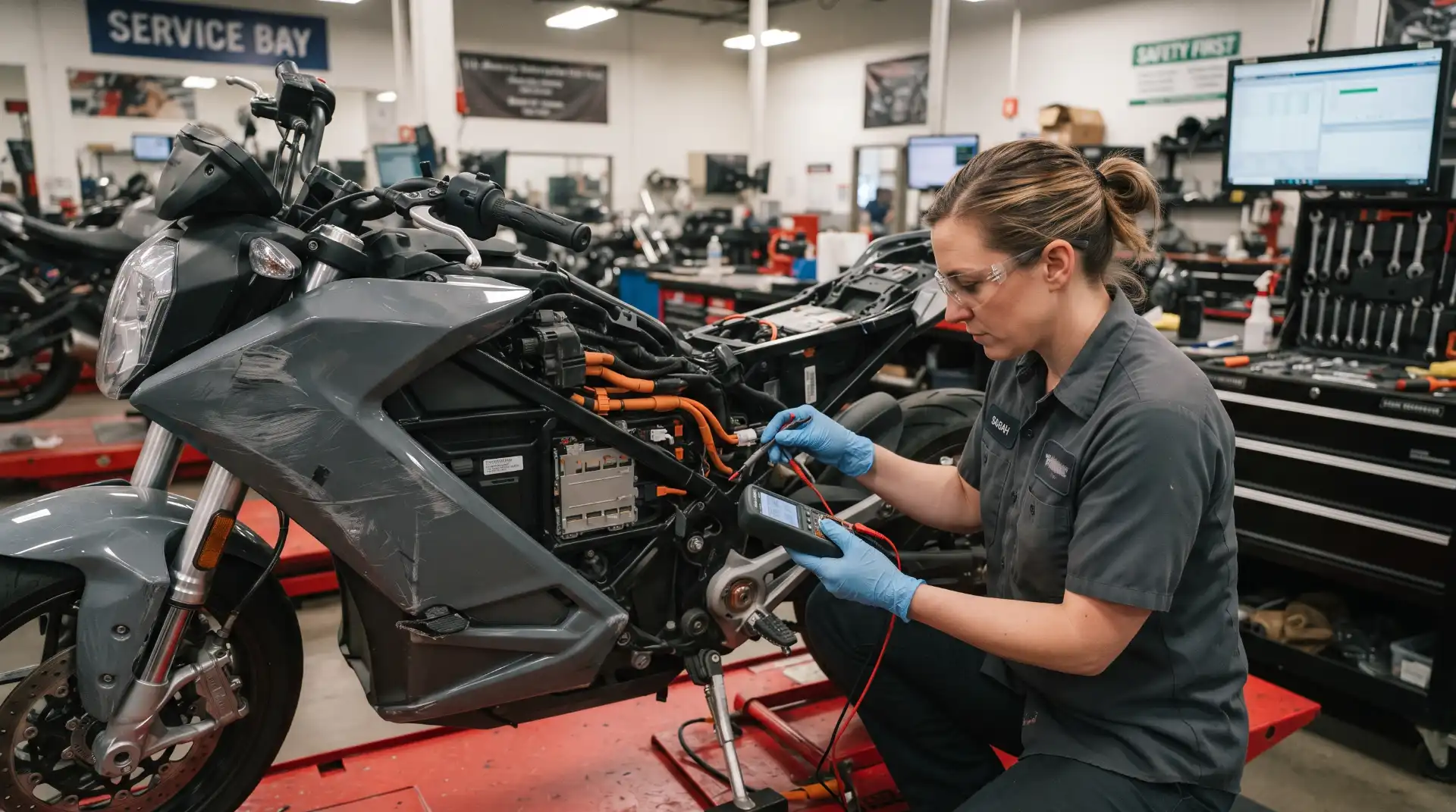
Modern electric motorcycles commonly use high-energy lithium-ion battery technology. These batteries can store substantial amounts of energy in a relatively compact package.
The U.S. Department of Energy notes that increasing use of lithium-ion batteries in electric and hybrid vehicles creates both opportunities and new challenges.
Most electric vehicle batteries are designed with sophisticated management systems and protective features. That does not mean battery-related hazards should be ignored.
Battery damage can become particularly important after a serious collision.
A crash can potentially damage battery cells, wiring, electrical connections, protective enclosures, or other components. Some damage may not be immediately obvious from a quick visual inspection.
This creates an important distinction between ordinary motorcycle crash damage and electric motorcycle crash damage.
A gasoline motorcycle may have obvious damage to the tank, engine, fairings, frame, wheels, or exhaust system. An electric motorcycle may appear relatively intact while sustaining damage to components that store large amounts of electrical energy.
For that reason, riders should not assume that an electric motorcycle is safe to operate simply because the battery enclosure does not appear severely damaged.
After a significant crash, professional inspection may be necessary before the motorcycle is ridden or charged again.
Thermal Runaway and Electric Motorcycle Fires
One of the battery-related terms riders should understand is thermal runaway.
Lithium-ion batteries contain individual cells that store significant amounts of energy. Under certain circumstances, a damaged or malfunctioning cell can experience an uncontrolled rise in temperature. That can potentially trigger a chain reaction involving nearby cells.
Battery safety is a serious area of ongoing research.
The Department of Energy has identified lithium-ion battery safety as an important issue across electric vehicles and other applications. Research and technology development continue to focus on detecting battery problems earlier and reducing fire risks.
For electric motorcycle riders, the practical takeaway is simple: battery damage should be taken seriously.
A rider involved in a collision should avoid attempting to repair a damaged high-voltage battery without appropriate training and equipment.
Warning signs such as unusual heat, smoke, swelling, strange odors, hissing sounds, or electrical problems should be treated seriously.
If a motorcycle has been involved in a significant crash, riders should follow the manufacturer’s safety instructions and contact qualified professionals rather than attempting an improvised battery repair.
Charging Creates Another Safety Consideration
Charging an electric motorcycle is different from filling a gasoline motorcycle with fuel.
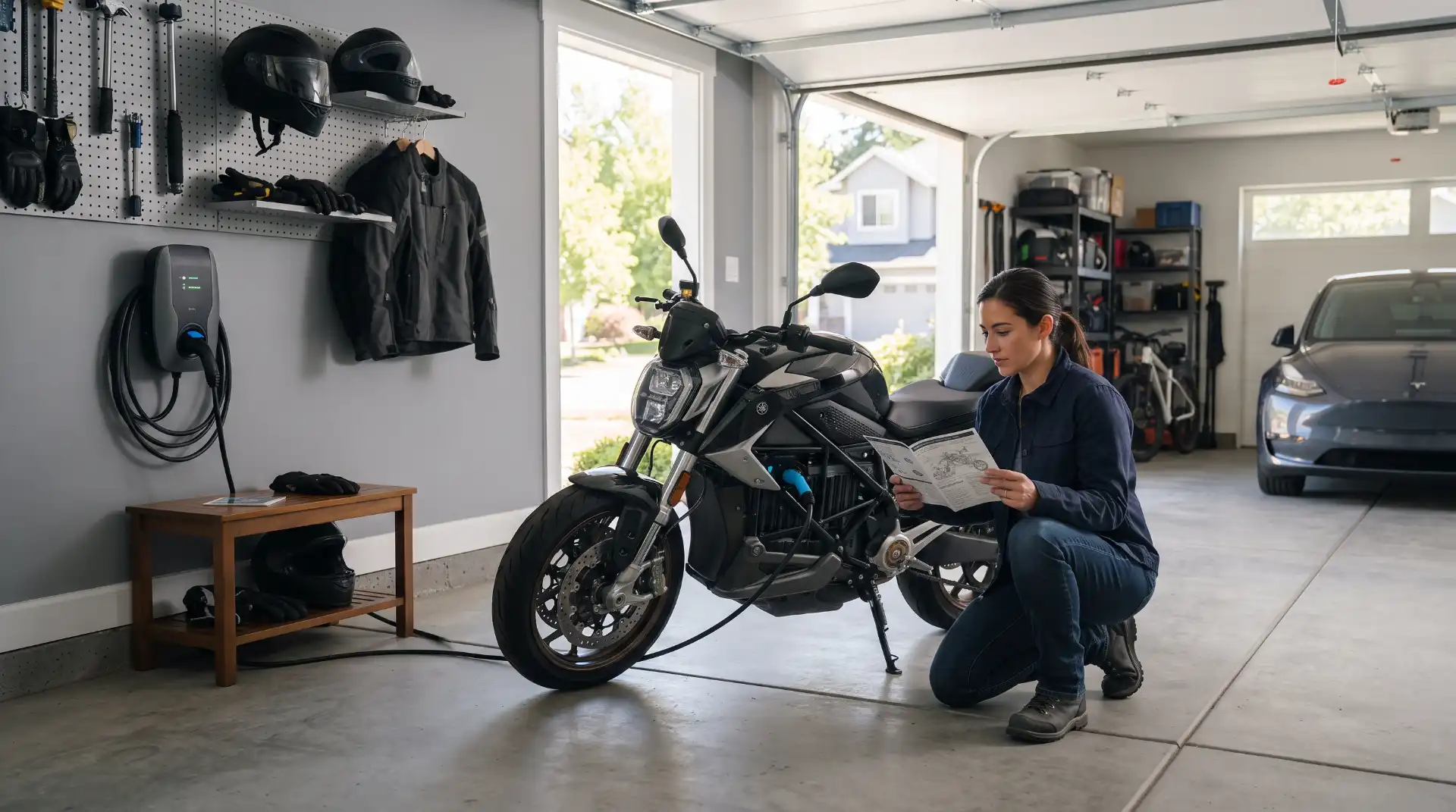
Electric motorcycle owners need to use the appropriate charger and follow the manufacturer’s charging instructions. Using damaged equipment, incompatible chargers, defective electrical components, or improperly installed charging equipment can create unnecessary hazards.
The charging environment also matters.
A motorcycle should be charged in an appropriate location with adequate ventilation and according to manufacturer recommendations. Riders should not ignore signs of battery or charger damage.
Electrical safety becomes particularly important when charging equipment has been exposed to water, physical damage, overheating, or a crash.
The U.S. Department of Energy has highlighted electrical safety concerns involving defective or counterfeit electrical products, including risks associated with overheating and short circuits.
This is one reason riders should be cautious about inexpensive replacement chargers, electrical components, or batteries from unknown sources.
Instant Torque Can Increase Loss-of-Control Risks
Electric motorcycles can produce immediate torque, which can make them extremely responsive.
That characteristic can be an advantage, but it can also surprise riders who are transitioning from conventional motorcycles.
A rider may twist the throttle expecting a familiar response and instead experience rapid acceleration.
This can be particularly concerning in situations involving:
- Wet pavement
- Gravel
- Sharp turns
- Intersections
- Heavy traffic
- Lane changes
- Parking lots
- Low-speed maneuvers
A sudden burst of acceleration can cause a rider to lose control, especially when traction is limited.
Electric motorcycles may offer adjustable riding modes, traction control, regenerative braking settings, and other electronic features. Riders should understand how these systems work before relying on them in an emergency.
Technology can assist a rider, but it cannot eliminate the basic risks associated with motorcycle operation.
Regenerative Braking Can Feel Different
Another characteristic of many electric motorcycles is regenerative braking.
When the rider reduces throttle input, the motor can operate differently from a conventional gasoline motorcycle’s engine and drivetrain. Depending on the motorcycle’s design and settings, the system may use regenerative braking to slow the motorcycle while returning some energy to the battery.
This can change how the motorcycle feels when the rider rolls off the throttle.
A rider accustomed to a traditional motorcycle may initially find the deceleration behavior unfamiliar.
Learning the motorcycle’s braking characteristics is particularly important before riding in heavy traffic.
Riders should also understand how regenerative braking interacts with conventional brakes and whether the motorcycle allows different levels of regeneration.
Unexpected deceleration or unfamiliar braking behavior can contribute to rider errors if the operator has not practiced with the motorcycle.
Electric Motorcycles Can Still Have Visibility Problems
Electric motorcycles may be quieter than gasoline motorcycles, but quiet operation should never be treated as a substitute for visibility.
Drivers frequently fail to notice motorcycles because of their relatively small size, positioning in traffic, blind spots, or driver inattention.
This is especially dangerous when a passenger vehicle turns left across the path of an approaching motorcycle.
A driver may look toward traffic but fail to recognize a motorcycle’s speed or distance correctly.
Electric motorcycles can potentially add another challenge because drivers may not hear them approaching as easily as a conventional motorcycle.
This does not automatically make an electric motorcycle more dangerous than a gasoline motorcycle. Instead, it reinforces the importance of defensive riding.
Riders should maintain appropriate following distances, avoid lingering in vehicle blind spots, use headlights and other required lighting, and assume that surrounding drivers may not see them.
Your site already has resources addressing distracted driving and motorcycle crashes, which can be useful internal reading for visitors researching visibility and driver negligence.
Electric Motorcycle Weight Can Affect Crash Dynamics
Battery packs can be heavy.
Depending on the motorcycle, battery configuration, frame design, and other components, an electric motorcycle may have a different weight distribution than a comparable gasoline-powered model.
That can affect handling.
Weight influences braking, cornering, acceleration, low-speed maneuvering, and the way a motorcycle behaves when it begins to fall.
It may also influence what happens during a collision.
For example, a heavier motorcycle can carry substantial momentum during a crash. The motorcycle’s weight and battery placement can affect how it slides, impacts another vehicle, or comes to rest.
Riders should become familiar with their motorcycle’s handling characteristics before riding aggressively or carrying a passenger.
Road Hazards Remain a Major Risk
Electric motorcycles are not immune to ordinary road hazards.
Potholes, debris, uneven pavement, construction zones, standing water, oil spills, railroad tracks, and poorly maintained roads can cause motorcycle crashes.
A relatively small road defect that might cause little trouble for a passenger car can be much more dangerous for a motorcycle.
A rider may lose balance, experience a sudden change in steering, or crash after encountering an unexpected obstacle.
Your website’s existing Road Hazard and Defective Equipment Claims resource is particularly relevant here because it addresses motorcycle crashes associated with unsafe roads and defective equipment.
In some cases, determining responsibility for a road-related motorcycle crash may require examining maintenance records, warning signs, road design, construction activity, photographs, witness accounts, and other evidence.
Defective Electric Motorcycle Components Could Create Liability Questions
Electric motorcycle accidents are not always caused by another driver.
A defective component may potentially contribute to a crash.
Potential examples could include a malfunctioning throttle system, defective brakes, battery problems, charging-system defects, software problems, steering components, tires, or other equipment.
Determining whether a product defect contributed to an accident can be complicated.
An injured rider may need evidence showing that a component malfunctioned and that the malfunction contributed to the crash.
Preserving the motorcycle after a suspected equipment-related crash can therefore be important.
Owners should avoid unnecessarily modifying, disassembling, or discarding potentially relevant components before they have been properly documented and inspected.
Electric Motorcycle Riders Still Need Proper Protective Gear
Electric propulsion does not change the basic physics of a motorcycle crash.
A rider can still be thrown from the motorcycle, struck by another vehicle, slide across pavement, or suffer severe impact injuries.
Protective gear remains important.
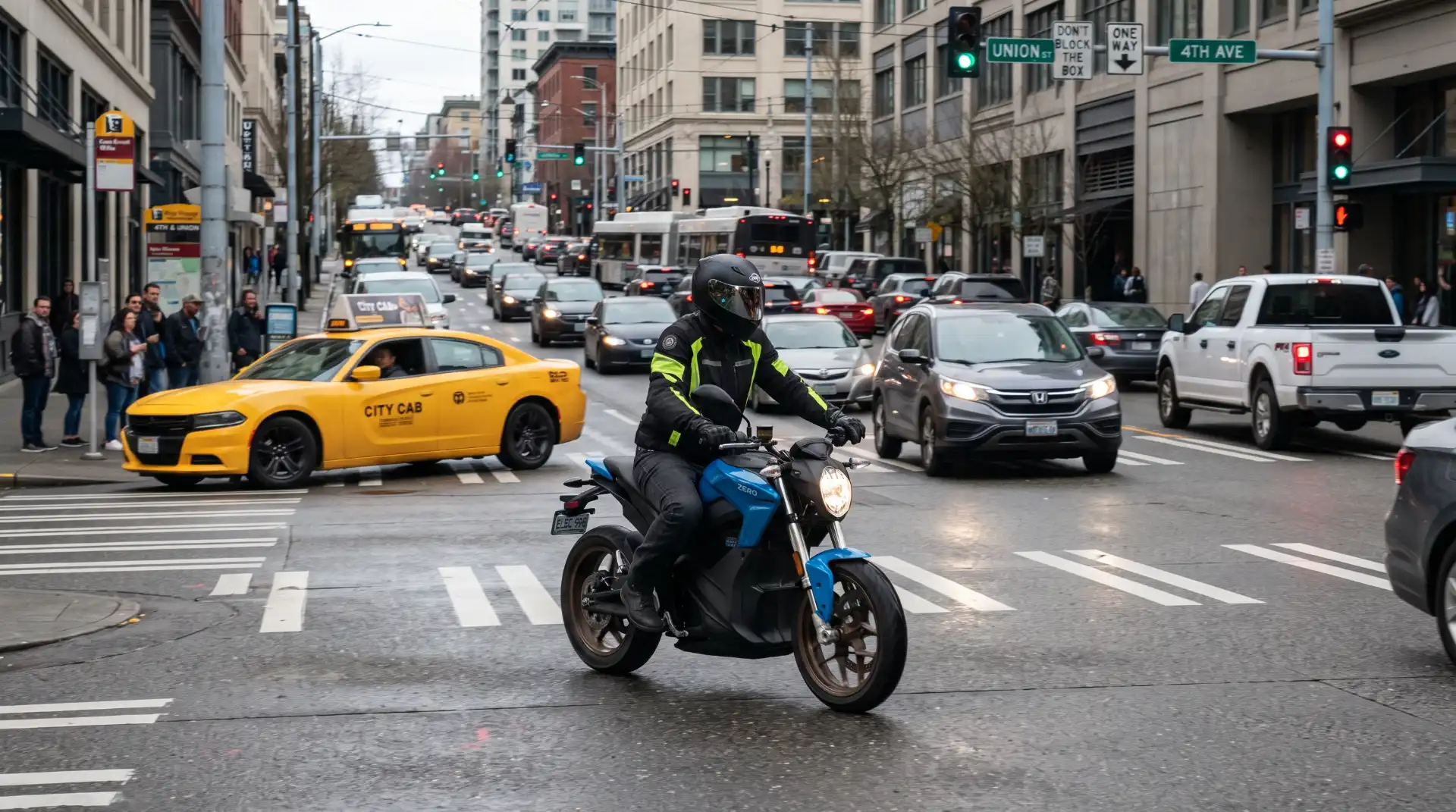
A properly fitted motorcycle helmet is one of the most important pieces of safety equipment available to riders.
IIHS reports that helmets are approximately 37% effective at preventing motorcycle deaths and about 67% effective at preventing brain injuries.
Helmet laws vary significantly throughout the United States. As of September 2026, IIHS reports that 17 states and the District of Columbia have universal motorcycle helmet requirements, while other states apply helmets requirements only to certain riders.
However, legal minimums and best safety practices are not always the same thing.
Riders should consider a quality helmet, motorcycle jacket, gloves, riding pants, and appropriate boots designed to provide protection during a fall.
ABS and Other Safety Technology Matter
Electric motorcycles can be equipped with advanced electronic safety systems.
One important technology is antilock braking systems, commonly known as ABS.
ABS can help prevent wheel lockup during hard braking. This can be especially valuable when a rider suddenly encounters a vehicle, pedestrian, debris, or another hazard.
IIHS states that ABS reduces motorcycle crash risk and substantially reduces fatality rates for motorcycles equipped with the technology.
However, ABS is not federally required on motorcycles sold in the United States.
IIHS reported in August 2026 that 71% of 2025 motorcycle models had ABS as standard equipment, while another 11% offered it as an option.
When purchasing an electric motorcycle, riders should therefore look beyond battery range and acceleration.
Safety equipment should be part of the purchasing decision.
What Happens If an Electric Motorcycle Crashes?
The first priority after any motorcycle crash is safety and medical care.
If you are injured, seek appropriate medical attention even if your injuries initially appear minor. Some motorcycle injuries can become more apparent hours or days after a collision.
If possible and safe, document the scene.
Photographs may show vehicle positions, road conditions, damage, skid marks, debris, traffic signs, lighting, lane markings, and other details that could become important later.
If the motorcycle has battery damage, avoid taking unnecessary risks with the motorcycle.
A crash involving an electric motorcycle may require additional documentation compared with a conventional motorcycle accident. Relevant information could include battery condition, charging history, warning messages, maintenance records, software information, repair records, and manufacturer communications.
Witness information can also be valuable.
If another driver caused the crash, their insurance information should be collected when possible.
Insurance Claims Can Become More Complicated
Insurance issues can be challenging after any motorcycle accident.
Electric motorcycles introduce additional questions because repair costs may involve specialized electrical components, batteries, charging systems, electronic controls, and manufacturer-specific parts.
The motorcycle may also have a different valuation than a conventional model.
An insurance company may evaluate the motorcycle based on its market value, repair costs, available parts, and policy terms.
In a serious injury case, the claim may involve far more than motorcycle damage.
An injured rider may face medical expenses, rehabilitation costs, lost income, future medical needs, pain and suffering, and other damages depending on the circumstances and applicable state law.
Your website’s Insurance Disputes resource provides additional information about dealing with insurers when a motorcycle accident claim is disputed or undervalued.
What Evidence Can Help After an Electric Motorcycle Crash?
Evidence can be particularly important when the cause of a crash is disputed.
Photographs and video can help establish what happened at the scene. Dashcam footage, helmet-camera recordings, surveillance footage, and witness statements may also provide valuable information.
For an electric motorcycle, additional evidence may include maintenance records, battery information, diagnostic data, charging records, repair documentation, and manufacturer information.
The motorcycle itself may also contain useful evidence.
If a rider believes a mechanical or electrical defect contributed to the crash, preserving the motorcycle can become especially important.
The circumstances will determine what evidence is relevant, but the general principle is straightforward: preserve potentially important information as soon as reasonably possible.
Your existing article on How to Prove Fault in a Motorcycle Crash Case is a natural internal link for readers who want to learn more about establishing liability.
Who Could Be Responsible for an Electric Motorcycle Accident?
Liability depends on the specific facts of the accident and the laws of the state where the crash occurred.
Another driver could be responsible if their negligence caused the collision.
Examples include distracted driving, speeding, impaired driving, unsafe lane changes, failure to yield, running a red light, or turning in front of a motorcycle.
In other situations, a road agency or property owner could potentially become relevant if an unsafe condition contributed to the crash.
A manufacturer or other company could potentially become involved when a defective motorcycle component contributes to an accident.
In some cases, more than one party may share responsibility.
That is why determining liability after a serious electric motorcycle crash may require more than simply reviewing the police report.
Electric Motorcycle Riders Should Prepare Before a Crash Happens
Safety begins before the motorcycle enters traffic.
Riders should understand the motorcycle’s controls, acceleration response, regenerative braking, riding modes, charging requirements, and warning systems.
New electric motorcycle owners should spend time practicing in controlled environments before entering high-speed or congested traffic.
Riders should also understand the laws that apply to motorcycles in their state.
Licensing, helmet requirements, insurance, equipment rules, lane-splitting laws, and other regulations can differ significantly across the United States.
The Motorcycle Crash Attorneys resource section includes information covering state motorcycle accident laws, helmet laws, lane-splitting and intersection accidents, insurance disputes, and other issues that may be relevant to riders.
The Future of Electric Motorcycles and Rider Safety
Electric motorcycles are likely to remain part of the changing U.S. transportation landscape.
Battery technology continues to develop, manufacturers are improving electronic controls, and motorcycle technology is becoming increasingly sophisticated.
These changes may eventually bring new safety advantages.
Better traction control, improved ABS, more advanced rider-assistance systems, improved battery monitoring, stronger battery enclosures, and better vehicle-to-vehicle communication could help reduce certain risks.
At the same time, new technology can introduce unfamiliar hazards.
The most important lesson is that electric motorcycles should not be treated as simply gasoline motorcycles with different engines.
Their unique characteristics deserve specific safety considerations.
Battery systems, charging equipment, instantaneous torque, regenerative braking, electronic controls, and reduced noise can all change how the motorcycle behaves and how riders interact with the road.
Final Thoughts for Electric Motorcycle Riders in 2026
Electric motorcycles offer American riders an exciting alternative to traditional gasoline-powered bikes. They can provide responsive performance, modern technology, and a different riding experience.
But electric propulsion does not eliminate the fundamental dangers of motorcycle riding.
Motorcyclists remain vulnerable to negligent drivers, road hazards, poor weather, excessive speed, visibility problems, and serious injuries during collisions. In 2024, more than 6,200 motorcyclists died in U.S. crashes, demonstrating the continuing importance of motorcycle safety.
Electric motorcycles also bring additional considerations involving high-voltage battery systems, charging, thermal events, instant torque, regenerative braking, and electronic controls.
Riders can reduce their risks by wearing appropriate protective equipment, using motorcycles equipped with modern safety technologies such as ABS, learning their motorcycle’s controls, following charging and maintenance instructions, and practicing defensive riding.
If a serious electric motorcycle accident does occur, preserving evidence and understanding potential sources of liability can be important.
Depending on the circumstances, a claim may involve another driver, an insurance company, a road-maintenance entity, a manufacturer, or another potentially responsible party.
For riders dealing with injuries after a motorcycle crash, understanding their legal options can be an important part of the recovery process.