
Autonomous vehicles are becoming more common on roads throughout the United States. Many drivers now rely on advanced systems such as automatic braking, lane assist, adaptive cruise control, and partial self-driving features during daily travel. While these technologies are designed to reduce collisions, they have also created new concerns for motorcycle riders.
Motorcycle accidents involving autonomous vehicles are receiving increased attention because motorcycles are smaller, less visible, and more difficult for some vehicle sensors to detect accurately. Riders already face significant risks from distracted drivers and unsafe lane changes. As more automated vehicles enter traffic, questions continue to grow about how these systems interact with motorcycles.
Many motorcycle crashes involving autonomous vehicles happen during lane merges, left turns, sudden braking events, or blind spot detection failures. In some situations, drivers may rely too heavily on automated systems and fail to monitor surrounding traffic carefully enough. These conditions may increase the likelihood of serious motorcycle collisions.
Understanding how these crashes happen may help riders become more aware of the risks associated with autonomous driving technology.
How Autonomous Vehicle Technology Works
Modern autonomous and semi-autonomous vehicles use a combination of sensors, cameras, radar systems, GPS mapping, and artificial intelligence software to monitor road conditions. These systems collect information continuously to identify nearby vehicles, pedestrians, cyclists, traffic signs, and lane markings.
Many vehicles now include features such as automatic emergency braking, adaptive cruise control, blind spot monitoring, lane departure warnings, and self-parking technology. Some manufacturers also offer highway autopilot systems that can partially control steering and speed under certain driving conditions.
Although these technologies are becoming more advanced, they are not fully independent in most situations. The National Highway Traffic Safety Administration explains that drivers must still actively supervise their vehicles and remain ready to take control at all times.
Why Motorcycles Can Be Difficult for Autonomous Systems to Detect
Motorcycles create unique challenges for autonomous driving systems because they are smaller and move differently than passenger vehicles. Cameras and radar sensors are often designed around larger vehicles with more predictable dimensions and movement patterns.
A motorcycle occupies less space on the road, making it more difficult for some systems to recognize quickly during fast-moving traffic conditions. Riders also frequently shift lane position to improve visibility, avoid debris, or respond to road hazards. These movements are normal for motorcycle safety but may appear less predictable to automated systems.
Lighting and weather conditions may also affect sensor performance. Rain, glare, shadows, or nighttime driving may reduce the ability of cameras and radar systems to consistently identify motorcycles. In heavy traffic, motorcycles traveling beside larger vehicles may temporarily disappear from sensor range.
Blind spot monitoring systems are another concern. Some drivers rely heavily on these systems during lane changes, yet motorcycles may not always trigger alerts immediately. This issue may increase the risk of sideswipe collisions on highways and busy city roads.
Common Motorcycle Accidents Involving Autonomous Vehicles
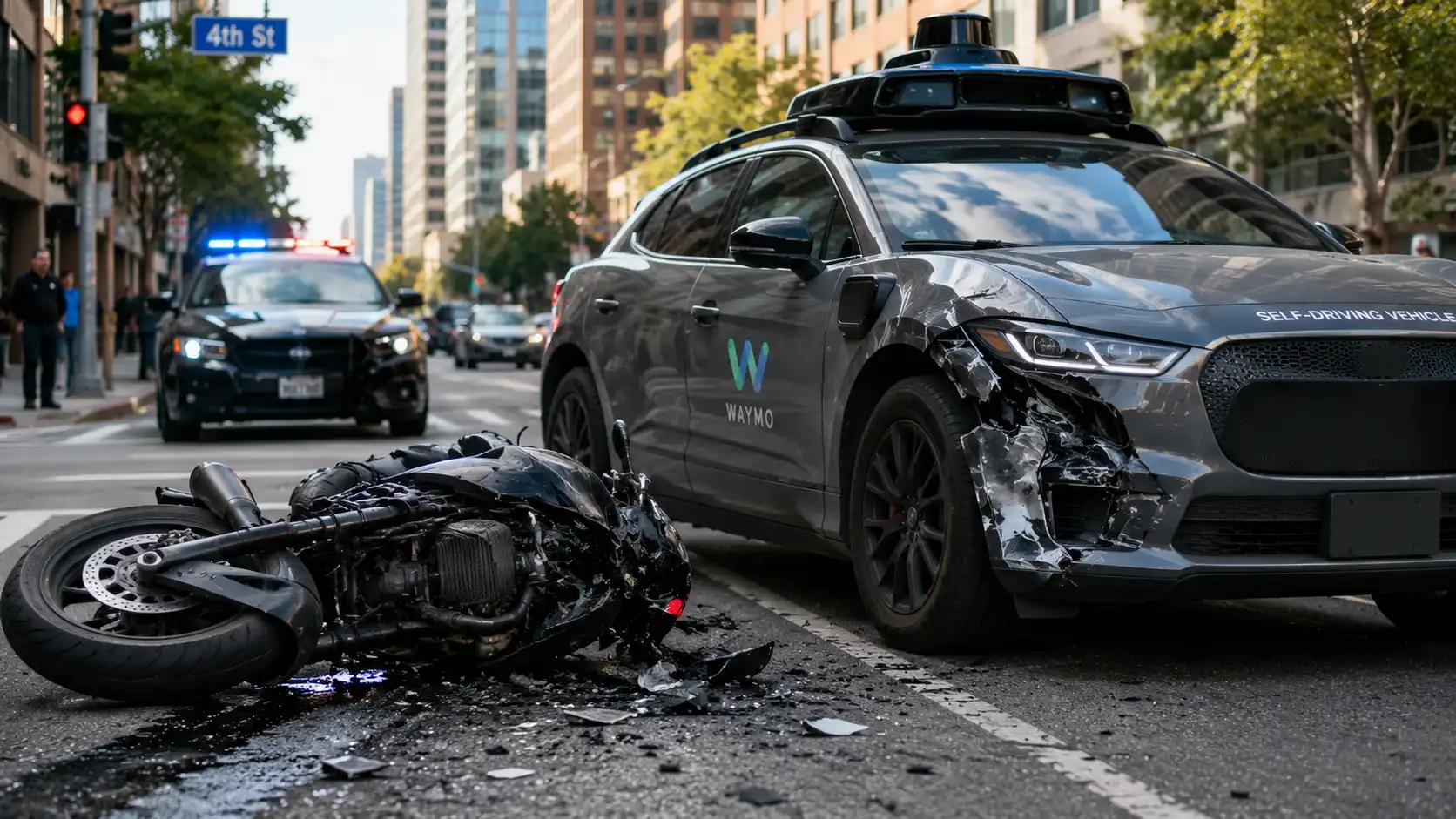
One of the most common motorcycle crashes involving autonomous vehicles occurs during lane changes. Drivers may trust blind spot monitoring systems too much and fail to visually check surrounding lanes before merging. Since motorcycles are smaller than passenger vehicles, they may be overlooked by sensors or cameras during certain traffic situations.
Left-turn collisions are another major concern. Some autonomous systems struggle to judge the speed and distance of approaching motorcycles. A vehicle turning left across traffic may miscalculate how quickly a motorcycle is approaching an intersection, creating a dangerous collision risk.
Sudden automatic braking events have also become an issue in some cases. Emergency braking systems occasionally activate unexpectedly due to sensor confusion or roadway conditions. A sudden stop may create serious rear-end crash risks for nearby riders.
Highway merge accidents may happen when autonomous lane-centering systems fail to account for motorcycles traveling close to adjacent lanes. Riders may also encounter problems in urban areas where automated parking systems and dense traffic conditions create unpredictable vehicle movements.
As autonomous technology continues evolving, crash investigations involving these vehicles are becoming more complex.
The Human Driver Still Plays a Major Role
Even though many vehicles now advertise self-driving or autopilot features, most autonomous systems still require active human supervision. Drivers remain legally responsible for operating their vehicles safely in nearly all situations.
One growing concern involves driver overreliance on automated technology. Some drivers become too comfortable with assistance systems and stop actively scanning traffic. This may delay reaction times during emergencies involving motorcycles.
Distracted driving also continues to contribute to crashes involving autonomous features. Drivers may look at phones, navigation systems, or dashboard screens while assuming the vehicle can handle traffic conditions independently.
Motorcycles already face visibility challenges around distracted drivers. When combined with overconfidence in automation, these risks may become even more dangerous for riders.
Determining Liability After These Crashes
Motorcycle accidents involving autonomous vehicles may involve more complicated liability investigations than traditional crashes. Multiple factors often need to be examined carefully before fault can be determined.
Investigators may review the behavior of the driver, the performance of the autonomous system, vehicle maintenance records, roadway conditions, and electronic driving data. In some situations, the driver may still hold primary responsibility for failing to supervise the vehicle properly.
In other cases, investigators may examine whether a software malfunction or sensor failure contributed to the crash. Vehicle data logs can provide information about speed, braking activity, steering input, and system warnings before impact.
Because these crashes involve advanced technology, accident reconstruction experts may also analyze sensor performance and driving software behavior. Video evidence from dash cameras, helmet cameras, or nearby traffic cameras may become especially important during these investigations.
Motorcycle Riders Face Serious Injury Risks
Motorcyclists remain far more vulnerable during collisions because motorcycles provide little physical protection compared to passenger vehicles. Even lower-speed crashes involving autonomous vehicles may result in severe injuries for riders.
Common injuries associated with these crashes include traumatic brain injuries, spinal cord injuries, fractures, road rash, neck injuries, and internal trauma. Riders may also suffer long-term mobility issues depending on the severity of the collision.
According to the Insurance Institute for Highway Safety, motorcycle riders continue facing significantly higher fatality rates compared to occupants of passenger vehicles.
Why Evidence Matters in Autonomous Vehicle Cases
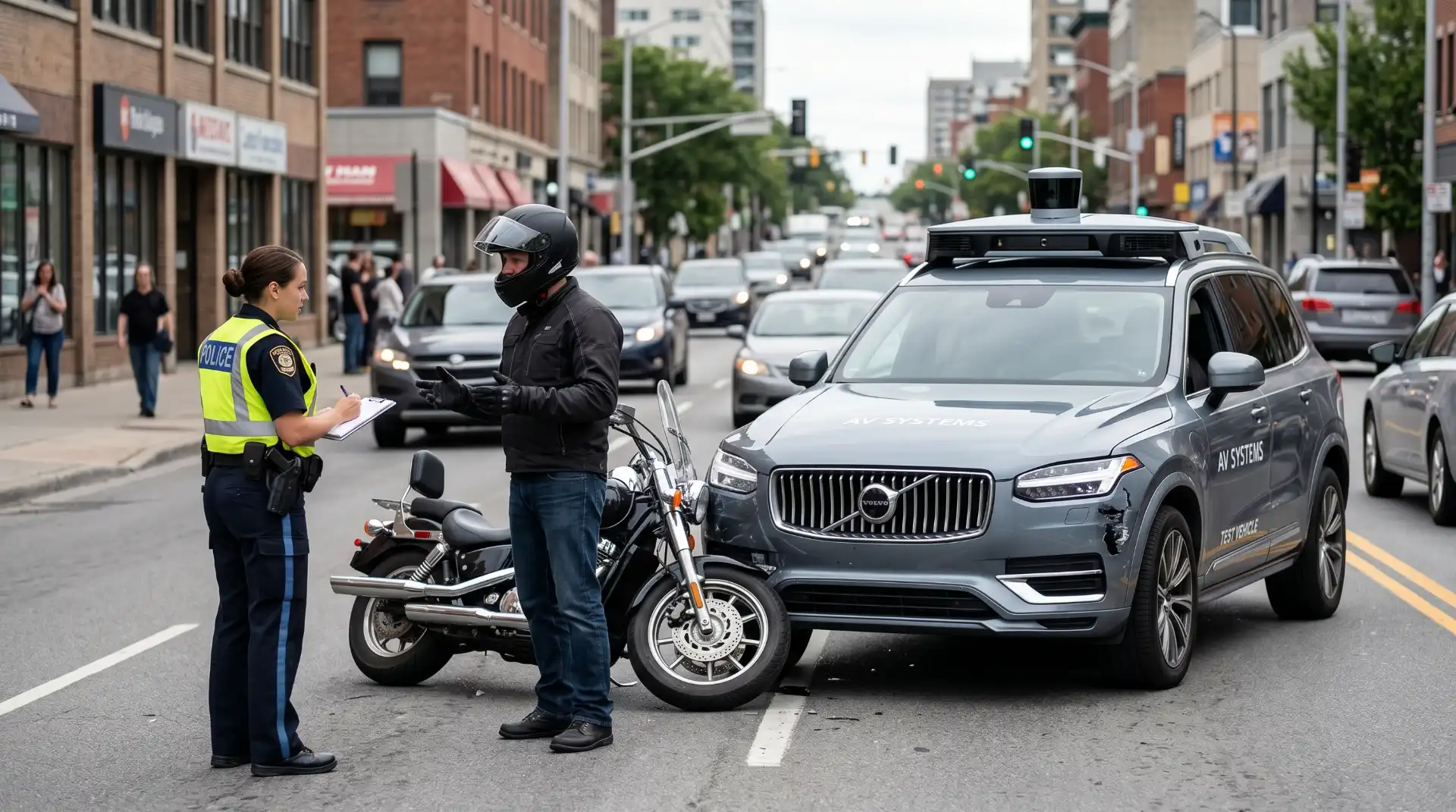
Evidence may play a major role in motorcycle accident claims involving autonomous vehicles because these cases often involve technical questions about vehicle behavior and system performance.
Electronic data stored within the vehicle may reveal whether automated systems detected the motorcycle before the collision. Investigators may also examine whether warnings were issued to the driver and whether the driver responded appropriately.
Helmet camera footage may provide valuable visual evidence showing traffic conditions, lane positioning, and driver behavior before the crash. Witness statements may also help clarify whether the other driver appeared distracted or overly reliant on autonomous features.
Crash reconstruction specialists sometimes use roadway measurements, vehicle damage patterns, and software data to better understand how the collision occurred.
Safety Tips for Riders Around Autonomous Vehicles
As autonomous technology becomes more common, motorcycle riders may benefit from taking extra precautions around vehicles equipped with advanced driving systems.
Remaining visible is especially important. Riders may reduce certain risks by avoiding extended travel in blind spots and maintaining clear lane positioning whenever possible.
Motorcyclists should also stay alert for sudden braking or unexpected lane movements. Drivers relying heavily on automated systems may react differently than fully attentive drivers.
Defensive riding techniques remain essential regardless of vehicle technology. Anticipating unpredictable traffic behavior may provide riders with additional reaction time during dangerous situations.
Some riders also choose to use helmet cameras for documentation purposes. Video evidence may become valuable if a crash occurs involving an autonomous or semi-autonomous vehicle.
 The Future of Motorcycle Safety and Autonomous Technology
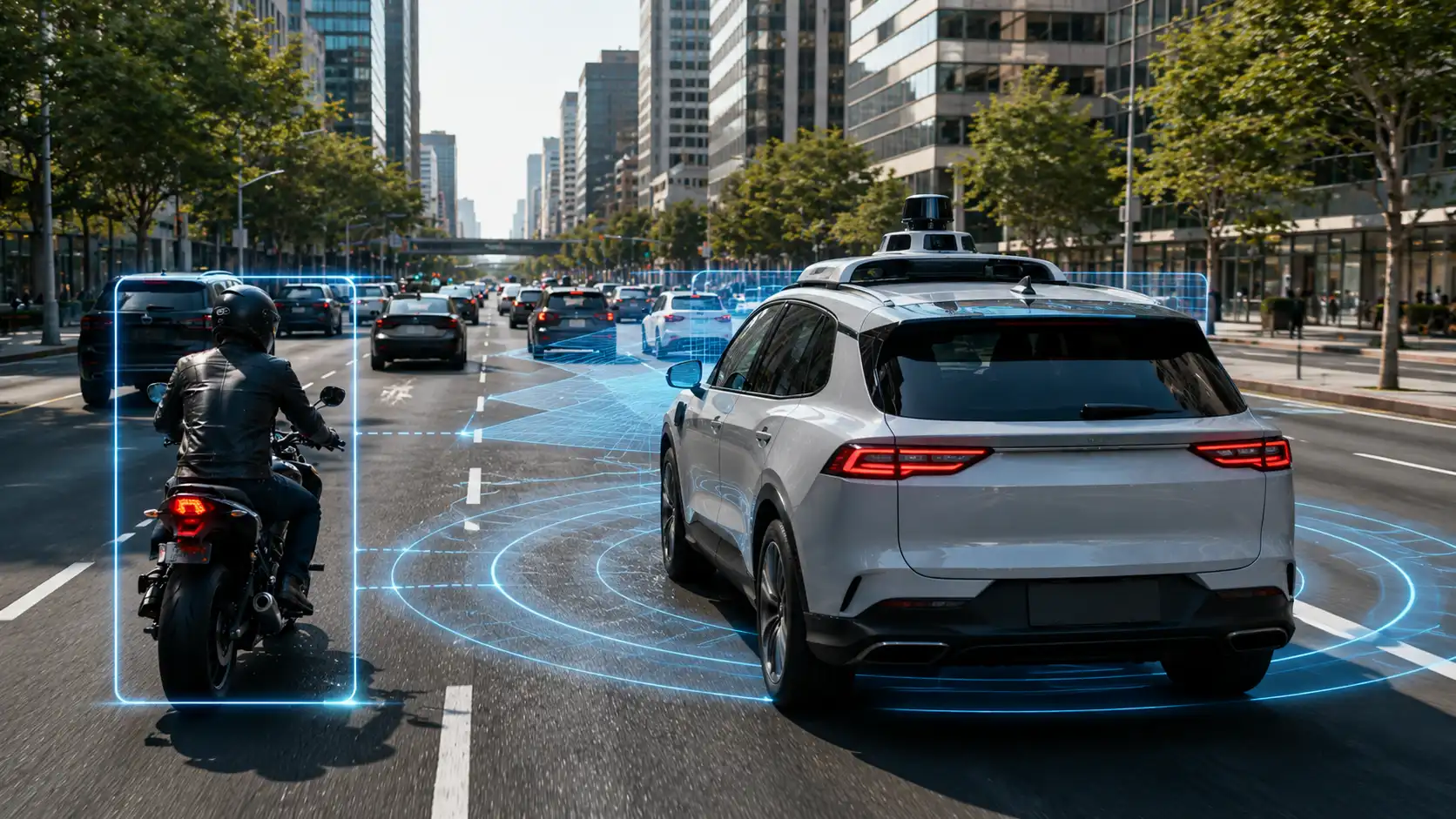
Vehicle manufacturers continue improving autonomous driving systems, but motorcycles remain one of the most difficult vehicle types for automated systems to identify consistently.
Some companies are developing newer technologies specifically designed to improve motorcycle detection through enhanced radar systems, artificial intelligence, and predictive movement analysis. Federal agencies and traffic safety organizations are also studying how automated vehicles interact with motorcycles in real-world driving conditions.
Supporters of autonomous driving technology believe these systems may eventually reduce crashes caused by distracted driving, fatigue, and impaired driving. However, current technology still faces limitations, especially in crowded urban environments and high-speed highway traffic.
Until autonomous systems become more reliable under all traffic conditions, motorcycle riders may continue facing uncertainty regarding how these vehicles respond around them.
What Riders Should Do After a Crash Involving an Autonomous Vehicle
Motorcycle accidents involving autonomous vehicles often require detailed investigations, making evidence collection especially important after a collision.
Riders should contact emergency services immediately and seek medical evaluation if injuries are present. Photographs of vehicle positions, roadway conditions, visible damage, and nearby surveillance cameras may help preserve important information.
If possible, riders may also want to note whether the other vehicle appeared to use autonomous or driver-assistance technology. Helmet camera footage, dashcam recordings, and witness contact information may become valuable later.
Medical attention remains important even if injuries initially seem minor. Some conditions may not appear immediately after the crash.
Final Thoughts
Motorcycle accidents involving autonomous vehicles are becoming a growing concern as automated driving technology expands throughout the United States. Although these systems are designed to improve road safety, motorcycles continue presenting unique visibility and detection challenges.
Crashes involving autonomous or semi-autonomous vehicles may involve complicated liability questions, technical evidence, and evolving safety standards. Riders remain especially vulnerable during these collisions because motorcycles provide far less protection than passenger vehicles.
As technology continues advancing, both drivers and riders may need to remain aware of the limitations associated with autonomous driving systems. Understanding how these crashes happen may help motorcyclists stay alert and better prepared while sharing the road with autonomous vehicles.