
Introduction
Motorcycle helmet laws are not just about safety—they significantly influence the outcome of accident claims. Whether you’re a rider or a legal professional, understanding how these laws impact liability, compensation, and legal proceedings is crucial. This comprehensive guide delves into the nuances of helmet laws and their implications on motorcycle accident claims.
1. The Evolution of Motorcycle Helmet Laws
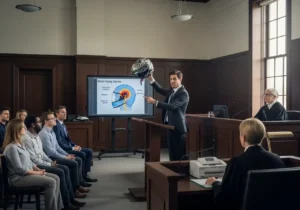
Motorcycle helmet laws have evolved over time, reflecting changing attitudes toward rider safety and personal freedom. Initially, many states enacted universal helmet laws, mandating all riders to wear helmets. However, over the years, some states have relaxed these laws, allowing certain riders to ride without helmets under specific conditions.
Understanding the historical context and current status of helmet laws in your state is essential for both riders and legal professionals. For instance, as of October 2025, Connecticut has expanded its helmet law to require all riders under 21 to wear helmets, including passengers and operators of high-powered e-bikes. Violations now carry fines up to $250 and potential jail time, highlighting the state’s commitment to rider safety The Sun.
2. Helmet Laws and Legal Liability
In states with universal helmet laws, failing to wear a helmet when required can be considered negligence. This non-compliance may reduce the rider’s ability to recover full compensation in the event of an accident. For example, in Florida, where helmet laws are mandatory for riders under 21, not wearing a helmet can lead to a reduction in compensation due to comparative negligence principles Personal Injury Attorney Central Florida.
Conversely, in states without helmet laws, the absence of a helmet may still be used by insurance companies to argue that the rider’s injuries were more severe than they would have been had a helmet been worn. This argument can lead to reduced compensation, even if the rider was not at fault for the accident OfficeChai.
3. Impact on Insurance Claims and Compensation
Insurance companies often consider helmet use when assessing claims. In states with universal helmet laws, not wearing a helmet can be a significant factor in determining liability and compensation. Insurers may argue that the rider’s injuries were aggravated due to the lack of a helmet, leading to reduced payouts OfficeChai.
In contrast, in states without helmet laws, while helmet use may not be legally required, insurers may still use the absence of a helmet to argue that the rider’s injuries were more severe, potentially reducing the compensation amount Bsuperb.
4. Helmet Use and Injury Severity
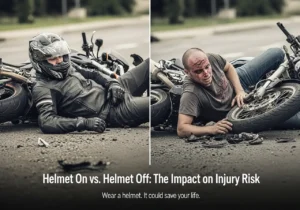
Studies have consistently shown that wearing a helmet significantly reduces the risk of fatal and severe head injuries in motorcycle accidents. According to the National Highway Traffic Safety Administration (NHTSA), in 2023, 51% of motorcyclists killed in states without universal helmet laws were not wearing helmets, compared to just 10% in states with universal helmet laws Crash Stats.
This data underscores the importance of helmet use in preventing serious injuries and fatalities. Additionally, wearing a helmet can influence the perception of negligence in legal proceedings, potentially affecting the outcome of accident claims.
5. State-by-State Variations in Helmet Laws
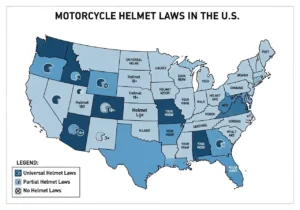
Helmet laws vary significantly across states, affecting how accident claims are handled. For example:
- California: Requires all riders to wear helmets. Non-compliance can lead to reduced compensation in accident claims.
- Florida: Requires helmets for riders under 21 or those without $10,000 in medical insurance. Not wearing a helmet can reduce compensation due to comparative negligence.
- New Hampshire: Has no helmet law. However, insurers may argue that the absence of a helmet contributed to the severity of injuries, affecting compensation.
Understanding the specific helmet laws in your state is crucial for both riders and legal professionals when navigating accident claims.
6. Legal Strategies for Riders Involved in Accidents
If you’re involved in a motorcycle accident, the following steps can help protect your rights and ensure fair compensation:
- Seek Immediate Medical Attention: Even if injuries seem minor, prompt medical evaluation is essential.
- Document the Scene: Take photographs of the accident scene, vehicle damage, and any visible injuries.
- Collect Witness Information: Obtain contact details of any witnesses to the accident.
- Consult a Motorcycle Accident Attorney: An experienced attorney can navigate the complexities of helmet laws and accident claims.
By taking these steps, you can strengthen your position in seeking compensation and ensure that your rights are protected.
7. External Resources for Further Reading
For more detailed information on motorcycle helmet laws and their impact on accident claims, consider visiting the following authoritative sources:
- National Highway Traffic Safety Administration (NHTSA) – Motorcycle Safety
- Insurance Institute for Highway Safety (IIHS) – Motorcycle Helmet Laws
- Governors Highway Safety Association (GHSA) – Helmet Laws
These resources provide comprehensive data and insights into helmet laws and motorcycle safety.
8. Conclusion
Understanding motorcycle helmet laws and their impact on accident claims is vital for both riders and legal professionals. Helmet use not only enhances safety but also plays a significant role in legal proceedings and insurance claims. By staying informed about state-specific laws and taking proactive steps following an accident, riders can better navigate the complexities of accident claims and ensure fair compensation.